Parts tumblers are tools that are used for the removal of burrs, scales, rust as well as other material that is unwanted on the surface of a part. Parts tumblers are an ideal solution when it comes to cleaning of equipment but they are not usually mentioned enough. Read More…
Otec USA Inc. is a world-class supplier of mass finishing equipment and supplies. Our primary products include centrifugal disc, drag and stream finishing machines to meet all of your deburring, polishing, grinding and honing requirements.

Giant Finishing is a well-known manufacturer of deburring equipment and machinery, media and compounds, molding vibratory bowls, multi-stage washers and more. We have over 100 standard models to choose from, or we can custom-manufacture products to meet your needs! In business for two decades, we provide the mass-finishing industry with complete equipment solutions.
Great Lakes Finishing Equipment, Inc. is a leading supplier of the deburring equipment, machines, and supplies for all your mass finishing projects. This equipment includes continuous systems, vibratory bowls, tubs, and high energy centrifugal barrel machines. Let our deburring specialists work with you to find the best deburring machinery for your project.

At ESMA, Inc., we specialize in designing and manufacturing advanced deburring equipment that streamlines precision finishing across a wide range of industries. With decades of experience at the forefront of electropolishing and metal finishing technologies, we’ve developed solutions that eliminate manual labor, reduce cycle times, and deliver consistent, high-quality results.



More Parts Tumbler Manufacturers
What is a Parts Tumbler?

A parts tumbler is an essential piece of equipment used across various manufacturing, maintenance, and repair industries for the efficient cleaning, deburring, polishing, and finishing of metal, plastic, and ceramic parts. This type of finishing machinery automates surface preparation processes, ensuring consistent results while saving time and labor costs.
Parts tumblers are especially vital in the automotive industry, where components require meticulous surface finishing to meet performance and safety standards. However, their use extends far beyond automotive applications, including aerospace, medical device manufacturing, metal fabrication, electronics, jewelry making, and more.
When considering the purchase of a parts tumbler, it's important to evaluate the different types available—primarily vibratory parts tumblers and rotary parts tumblers. Each type offers unique advantages for specific parts finishing requirements. Understanding their mechanisms, capabilities, and ideal use cases can help you make an informed decision that aligns with your production goals.
Types of Parts Tumblers
Parts tumblers are generally divided into two main categories, each engineered for particular finishing operations and material types:
- Vibratory Parts Tumblers
- Rotary Parts Tumblers
Both types are available in a variety of sizes, configurations, and automation levels, making them suitable for everything from small-scale prototyping to high-volume industrial manufacturing.
Vibratory Tumbler
A vibratory tumbler is a specialized mass finishing machine that uses controlled vibrations to achieve surface finishing. This method, known as vibratory finishing, is among the most widely used techniques for deburring, polishing, and cleaning large quantities of small to medium-sized parts.

The vibratory tumbler process involves placing workpieces and media (such as ceramic, plastic, or steel pellets) inside a tub or bowl. When the machine operates, a motor induces high-frequency side-to-side vibrations. These vibrations cause the contents to grind against each other, effectively removing burrs, smoothing rough edges, and producing a polished finish.

To enhance the finishing process, compounds or chemicals are often added to the media, promoting cleaning, rust removal, or achieving specific surface textures. The vibratory tumbler’s unique motion ensures a uniform finish, significantly reducing manual labor and process times compared to traditional hand finishing.
In comparison to barrel tumblers, vibratory tumblers provide faster cycle times, higher throughput, and the ability to process delicate parts with less risk of damaging sharp corners or intricate features. The vibratory action is approximately five to ten times more efficient than the free-fall action in barrel tumbling, making it ideal for high-volume, precision finishing.
Common Questions About Vibratory Tumblers
- What parts are best finished in a vibratory tumbler? — Vibratory tumblers excel at processing small-to-medium metallic, plastic, or ceramic parts that require uniform deburring, cleaning, or polishing with minimal risk of part-on-part damage.
- How do I select the right media for vibratory tumbling? — The optimal media type depends on your material, finish requirements, and desired processing time. Learn more about vibratory tumbler media selection.
Rotary Tumblers
Rotary parts tumblers, sometimes referred to as barrel tumblers, operate by rotating a barrel or drum containing workpieces and abrasive media. The rotating motion creates a sliding and cascading action that gently grinds and polishes the surfaces of the parts. Rotary tumblers typically consist of a cylindrical or hexagonal barrel, a drive motor, gear assembly, and a stable base.
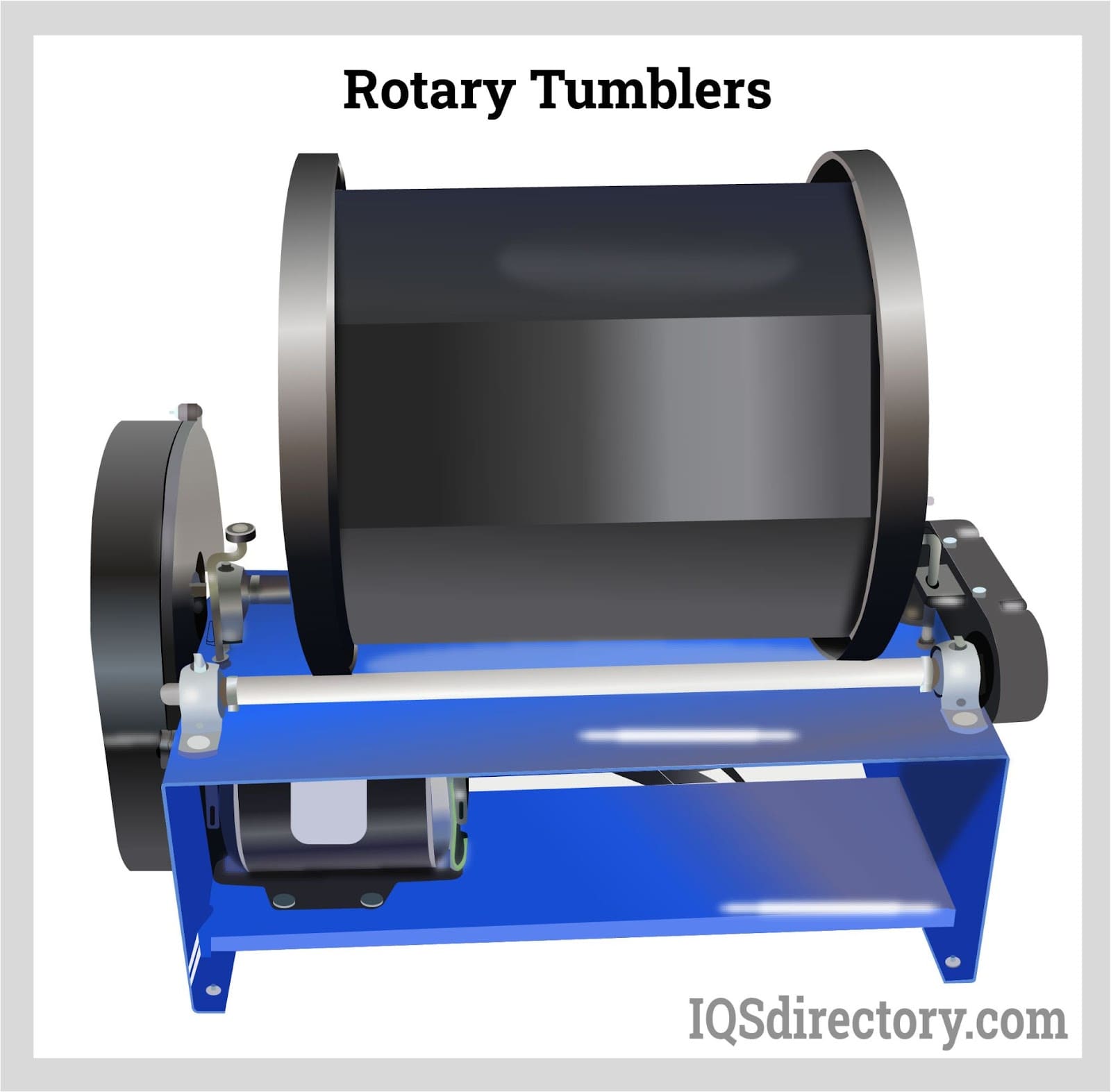
A key advantage of rotary tumblers is their ability to handle delicate or irregularly shaped parts without causing impact damage. The gentle, rolling motion is particularly suitable for polishing jewelry, coins, and precision-manufactured components, as well as for cleaning heavily soiled or rusted items.
Rotary tumblers support a wide range of tumbling media types, including ceramic, stainless steel shot, plastic, organic materials (such as walnut shells and corn cob), and abrasive compounds. The selection of media and compounds allows for a variety of finishing actions, from aggressive deburring to fine polishing.
Both rotary and vibratory tumblers can be used for dry tumbling or wet tumbling processes. Wet tumbling is favored for parts requiring a high-gloss finish or when dust control is important, while dry tumbling is often used for gentle polishing or when working with delicate parts.
Frequently Asked Questions About Rotary Tumblers
- When should I use a rotary tumbler instead of a vibratory tumbler? — Rotary tumblers are best suited for fragile, oddly shaped, or highly detailed parts where gentle action is required and surface preservation is critical.
- What are the maintenance requirements for rotary tumblers? — Rotary tumblers require periodic inspection of the barrel, drive assembly, and media replenishment to ensure consistent performance and longevity.
Applications of Parts Tumblers
Parts tumblers are versatile tools that serve a broad spectrum of industrial and commercial applications. Their use is integral to:
- Descaling — Removing scale, rust, and oxidation from metal parts to prepare for coating or further processing.
- De-rusting — Cleaning and restoring corroded surfaces, especially in restoration or maintenance settings.
- Deburring — Eliminating sharp edges, burrs, and leftover material from machining, stamping, or casting processes.
- De-flashing — Removing excess material from molded or cast parts for a cleaner finish.
- Polishing — Producing smooth, mirror-like finishes on metals, plastics, and ceramics.
- Surface Preparation — Enhancing adhesion for plating, painting, or coating operations.
- Strengthening Surface Bonds — Improving the bonding of plating and coating materials for greater durability.
Industry-Specific Use Cases
- Automotive Manufacturing — Engine components, gears, brackets, and fasteners undergo mass finishing for improved performance and longevity.
- Aerospace — Precision parts require burr-free surfaces to meet safety and reliability standards.
- Medical Devices — Stainless steel surgical tools and implants are polished to ensure biocompatibility and hygiene.
- Jewelry Making — Gold, silver, and gemstone pieces are polished for visual appeal and comfort.
- Firearms & Defense — Deburring and cleaning are critical for safe, reliable function.
- Electronics — Small connectors and casings are smoothed and cleaned to ensure optimal performance.
- General Metal Fabrication — Finished parts are prepared for final assembly or sale.
How Can You Improve Your Manufacturing Process with Parts Tumblers?
Are you looking to increase throughput, reduce manual labor, and achieve consistent, high-quality surface finishes? Explore how integrating parts tumblers can streamline your production line. See more use cases for parts tumblers across different industries.
Benefits of Parts Tumblers
Selecting the right parts tumbler machine can drastically improve your finishing quality, productivity, and cost efficiency. Here are the core benefits:
- Quiet Operation — Rotary tumblers operate with minimal noise, making them suitable for environments where sound levels must be controlled.
- Low Operational Costs — Rotary tumblers combine gentle deburring and cleaning with low energy consumption and media usage.
- High Load Capacity — Vibratory tumblers are engineered to process large batches of parts simultaneously, maximizing throughput for high-volume manufacturers.
- Fast Cycle Times — Vibratory tumblers complete finishing cycles significantly faster than manual or rotary methods, reducing lead times.
- Superior Surface Finish — Achieve a smoother and more uniform polish, especially on complex or intricate part geometries.
- Versatility — Both rotary and vibratory tumblers can handle a wide variety of materials and part shapes, including metals, plastics, ceramics, and composites.
- Safe Finishing of Various Materials — With the correct media and settings, parts tumblers process plastic, ceramic, and metal parts without causing damage.
- Multiple Shapes and Capacities — Available in configurations to match your specific batch size and space constraints.
- Automation Options — Many modern tumblers offer integrated automation for loading, unloading, media separation, and process control, reducing labor and improving consistency.
- Consistency & Repeatability — Automated tumblers ensure that each batch of parts receives identical finishing, critical for quality assurance in regulated industries.
- Environmental Efficiency — Wet tumbling systems can be designed for water and compound recycling, helping reduce environmental impact and compliance costs.
How to Choose the Right Parts Tumbler for Your Application
Choosing the right parts tumbler depends on several factors:
- Material Type — Consider whether you’ll be finishing metals, plastics, ceramics, or composites. Some tumbler types and media are better suited for delicate or soft materials.
- Part Size and Shape — Evaluate the geometry and fragility of your parts. Rotary tumblers are ideal for delicate or intricate shapes, while vibratory tumblers handle larger batches of robust parts.
- Volume and Throughput — High-volume production lines benefit from the speed and capacity of vibratory tumblers. For small-batch or prototype work, a rotary tumbler may be more economical.
- Desired Finish — Are you looking for aggressive deburring, gentle cleaning, or high-shine polishing? Match your process to the tumbler style and media.
- Process Automation — Consider whether you need features like automated loading/unloading, programmable cycles, or integrated media separation.
- Budget and ROI — Factor in not just the purchase price but also operating costs, maintenance, and potential productivity gains.
Need help selecting the best parts tumbler for your shop or production line? Check out our comprehensive guide to parts tumbler selection or contact a supplier for expert advice.
Parts Tumblers vs. Manual Finishing: Why Automate?
Still relying on manual deburring, cleaning, or polishing? Automated parts tumblers offer several advantages over traditional methods:
- Labor Savings — Reduce the need for skilled operators and minimize repetitive strain injuries.
- Consistent Quality — Achieve uniform results across every batch, eliminating variability from operator fatigue or technique.
- Faster Turnaround — Automated cycles complete much quicker than hand finishing, accelerating your entire workflow.
- Lower Consumable Costs — Optimized use of tumbling media and compounds reduces waste.
- Scalability — Easily scale up production as your business grows without major investments in additional labor.
Curious about switching from manual finishing to automated tumbling? Contact us for a cost/benefit analysis and ROI estimate.
Choosing the Proper Parts Tumbler Company
To ensure you achieve the best results when purchasing a parts tumbler system, it’s crucial to select a reputable manufacturer or supplier with proven expertise in your industry. Here’s how to streamline your buying process:
- Compare Multiple Manufacturers: Use our Parts Tumbler Supplier Directory to compare at least four qualified manufacturers. Each company profile highlights their areas of specialization, experience, and customer reviews.
- Review Capabilities: Look for manufacturers with experience in your industry and with the part sizes, materials, and finishing requirements relevant to your needs.
- Request Quotes and Information: Use the integrated contact forms to ask for product specs, pricing, lead times, and sample processing. Don’t hesitate to ask for case studies or references.
- Website Previewer: Take advantage of our proprietary website previewer to explore each company’s online presence and get a feel for their expertise and customer support.
- Submit an RFQ: Fill out a single request-for-quote (RFQ) form to reach multiple manufacturers at once, simplifying communication and comparison.
Frequently Asked Questions About Parts Tumblers
- How long does a typical tumbling cycle take? — Cycle times vary by machine type, media, and finish required. Vibratory tumblers often complete cycles in 1–3 hours, while rotary tumblers may require 4–24 hours for certain finishes.
- Can parts tumblers be integrated with other equipment? — Yes, many modern systems support integration with conveyors, separators, dryers, and automated handling equipment for end-to-end process automation.
- Is operator training required? — Basic training ensures safe and efficient use, but automated and programmable controls minimize the learning curve.
- What safety considerations are there? — Machines should be operated with guards in place, and appropriate PPE should be worn. Always follow manufacturer guidelines.
- How do I maintain my parts tumbler? — Regular inspection, media replacement, and cleaning will extend machine life and maintain process consistency.
Start Your Search for the Ideal Parts Tumbler
Whether you’re upgrading your current finishing process, launching a new product line, or expanding your manufacturing capabilities, investing in the right parts tumbler machine can transform your operations. Explore our Parts Tumbler directory to compare top manufacturers, or contact us for guidance tailored to your specific needs.
Ready to automate your finishing process? Request a quote today and discover how the right parts tumbler can improve your productivity, product quality, and bottom line.
 Deburring Machinery
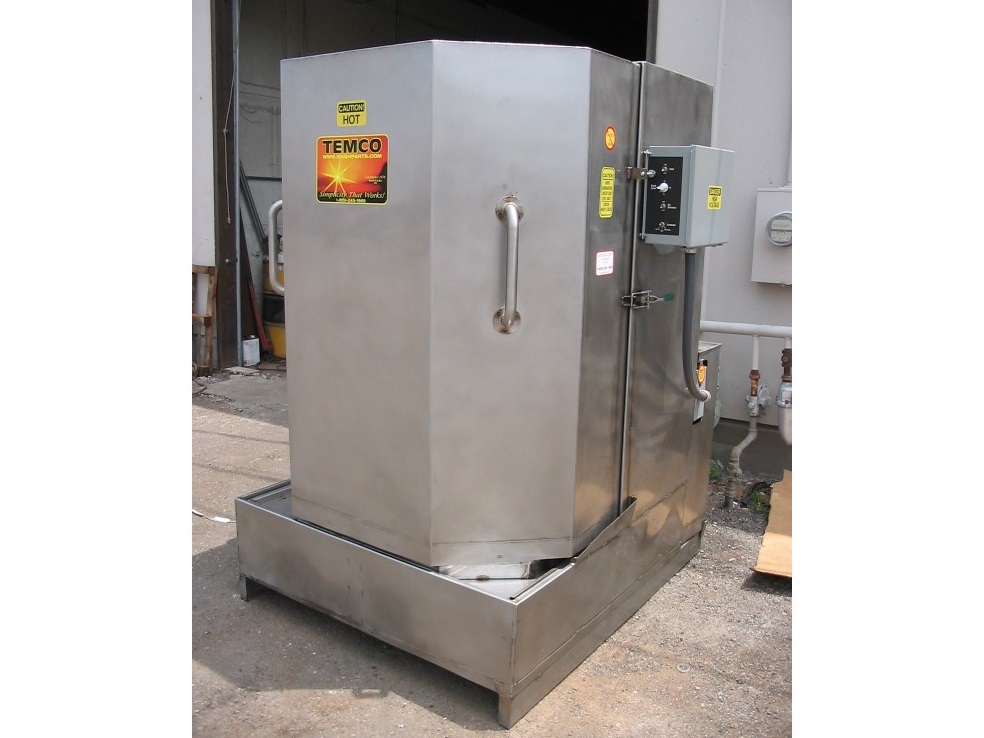 Industrial Parts Washers
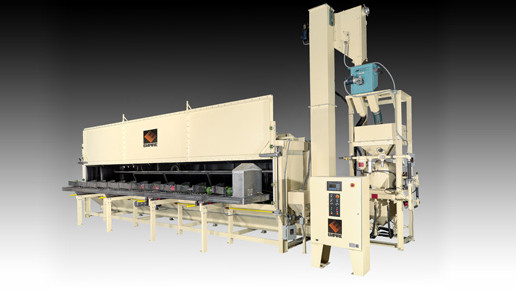 Sandblast Equipment
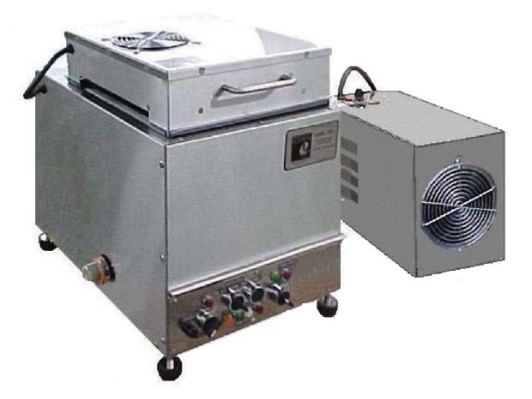 Ultrasonic Cleaners
 Castings & Forgings
 Bulk Material Handling
 Electrical & Electronic Components
 Flow Instrumentation
 Hardware
 Material Handling Equipment
 Metal Cutting Services
 Metal Forming Services
 Metal Suppliers
 Motion Control Products
 Plant & Facility Equipment
 Plant & Facility Supplies
 Plastic Molding Processes
 Pumps & Valves
 Recycling Equipment
 Rubber Products & Services