A tumbling barrel is defined as a drum where objects are packed in a loose manner and then brought to an action of tumbling for polishing or mixing. Read More…
Otec USA Inc. is a world-class supplier of mass finishing equipment and supplies. Our primary products include centrifugal disc, drag and stream finishing machines to meet all of your deburring, polishing, grinding and honing requirements.

Giant Finishing is a well-known manufacturer of deburring equipment and machinery, media and compounds, molding vibratory bowls, multi-stage washers and more. We have over 100 standard models to choose from, or we can custom-manufacture products to meet your needs! In business for two decades, we provide the mass-finishing industry with complete equipment solutions.

Great Lakes Finishing Equipment, Inc. is a leading supplier of the deburring equipment, machines, and supplies for all your mass finishing projects. This equipment includes continuous systems, vibratory bowls, tubs, and high energy centrifugal barrel machines. Let our deburring specialists work with you to find the best deburring machinery for your project.

At ESMA, Inc., we specialize in designing and manufacturing advanced deburring equipment that streamlines precision finishing across a wide range of industries. With decades of experience at the forefront of electropolishing and metal finishing technologies, we’ve developed solutions that eliminate manual labor, reduce cycle times, and deliver consistent, high-quality results.






More Tumbling Barrel Manufacturers
What Is a Tumbling Barrel?

A tumbling barrel is a specialized industrial machine designed to automate the process of finishing, polishing, deburring, cleaning, or drying a wide range of parts and materials. Often resembling a cask or drum, a tumbling barrel continuously revolves, gently agitating its contents so that objects inside are exposed to consistent abrasion, friction, or polishing action. As the barrel rotates, the parts interact with abrasive media, compounds, or polishing agents, resulting in a uniform surface finish. This process is fundamental in a variety of manufacturing, fabrication, and metalworking applications, providing an efficient and cost-effective alternative to manual finishing methods.
Whether you are in the metal fabrication, jewelry, automotive, aerospace, or electronics industries, tumbling barrels are essential for surface treatment, edge rounding, scale removal, rust removal, and part cleaning. Their versatility and scalability make them a preferred choice for both small workshops and large manufacturing facilities seeking consistent, repeatable, and high-quality surface finishes.
How Tumbling Barrels Function
The tumbling barrel process—also known as barrel finishing or barrel tumbling—relies on the principle of frictional force generated by the motion of parts and abrasive media inside a rotating drum. As the barrel turns, the mixture of workpieces, abrasives, and finishing compounds cascades within the enclosure, causing the surfaces to rub against each other and against the abrasive particles.
Key components in this process include:
- Abrasive Media: Ceramic, plastic, steel, glass beads, walnut shells, or corn cob grit are chosen based on the desired finish and material type.
- Lubricating and Polishing Agents: Liquids and compounds help control cutting action, reduce heat, and facilitate cleaning and polishing.
- Barrel Construction: Barrels are often constructed of steel with durable linings such as rubber, neoprene, vinyl, or urethane to protect both parts and the barrel itself from excessive wear.
- Rotation Speed and Fill Rate: The velocity and load size are calibrated to optimize the tumbling action for different materials and finishing requirements.
The barrel finishing process is ideal for a variety of finishing operations, including deburring sharp edges, rounding corners, descaling, deflashing, grinding, burnishing, radiusing, and improving the overall surface finish of both ferrous and non-ferrous metal parts, plastics, and other materials.
Common Search Questions on Tumbling Barrels:
- What are the best tumbling barrels for metal finishing?
- How do I choose the right abrasive media for my tumbling barrel?
- What is the difference between wet and dry barrel tumbling?
- How does barrel finishing compare with vibratory finishing?
- What maintenance is required for tumbling barrel machines?
Types of Tumbling Processes
Tumbling barrels can be adapted for different finishing objectives by varying the type of process. The two primary types are wet tumbling and dry tumbling, each offering unique advantages for specific materials and applications.
Wet Tumbling
Wet tumbling utilizes a combination of abrasive media, water, and chemical compounds within the barrel. The most common wet tumbling barrels are oblique or horizontal, often hexagonal or octagonal in design to maximize mixing and movement.
Wet tumbling is preferred for:
- Producing smooth, bright, and clean finishes on metals and plastics
- Efficiently removing burrs, scale, and surface contaminants
- Reducing dust and heat during the finishing process
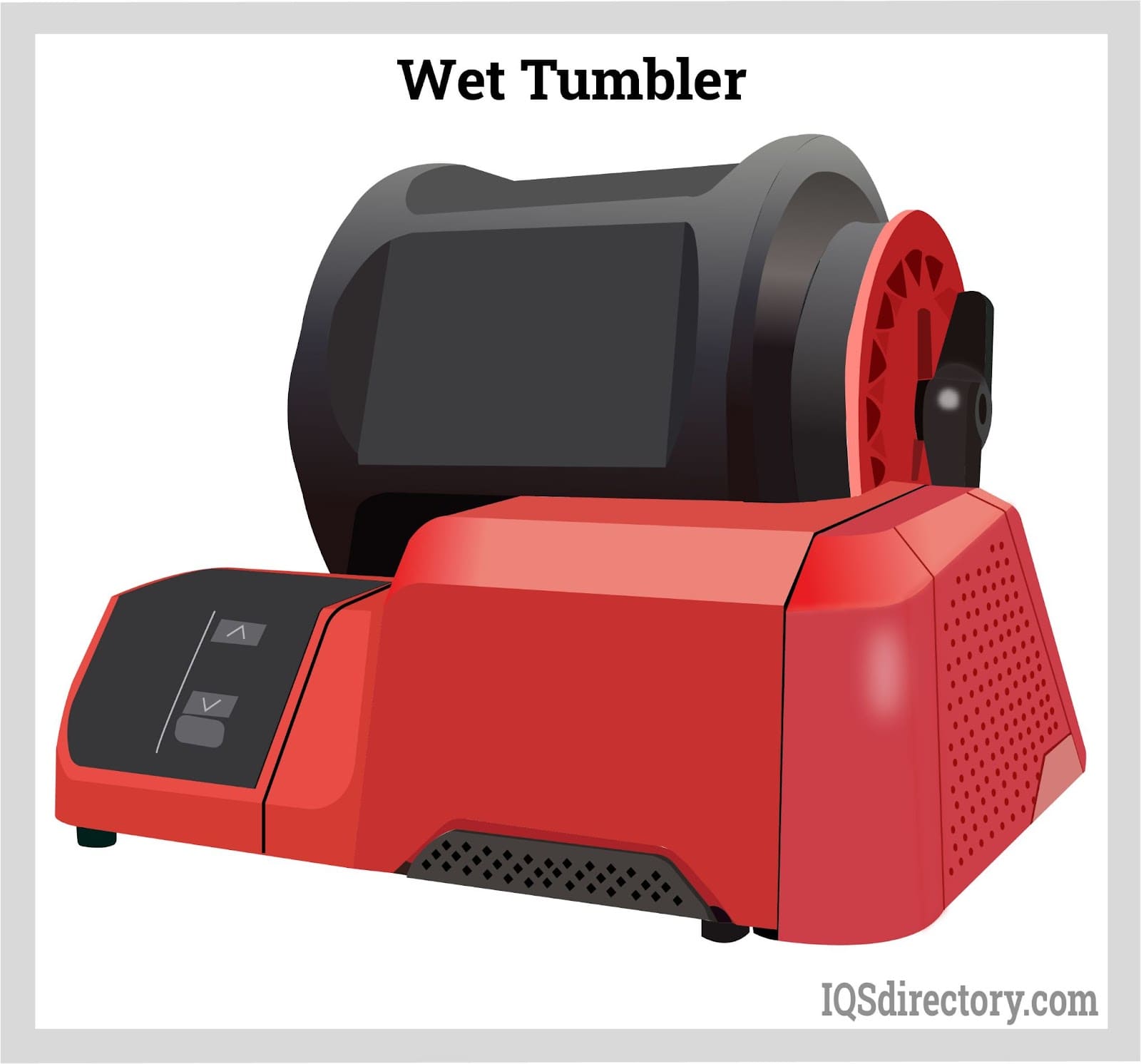
The barrels—typically constructed of steel and lined with rubber, neoprene, or polyurethane—are filled to about half capacity with parts and abrasive media. Water and finishing compounds are then added, just below the top of the load. The ratio of water to media can influence the quality of the finish, with more water generally resulting in a finer, more polished surface. Tumbling cycles for wet processes can range from six to 24 hours depending on the required finish and material hardness.
For lightweight parts, such as plastic components, hardwood media or smooth ceramic can be added to the mix to increase load mass and ensure even action. After tumbling, parts and barrels are rinsed with fresh water to remove residues, and the finished parts are often dried using corn cob grit or similar absorbent media. Learn more about corn cob media for drying and polishing.
Typical Wet Tumbling Applications:
- Deburring and polishing of machined metal parts
- Surface smoothing of die castings and forgings
- Cleaning and burnishing jewelry and coins
- Removing oxidation and preparing surfaces for coating or painting
Dry Tumbling
Dry tumbling uses abrasive or polishing media without any liquid. The most common dry barrels are horizontal and octagonal, usually constructed from metal with a replaceable hardwood lining to cushion parts and reduce noise.
Some dry tumbling machines feature a double-deck design, allowing two barrels to be stacked in a single frame for increased throughput and space efficiency.

Dry tumbling is ideal for:
- Achieving high-gloss polishes on soft or delicate parts (such as plastics, brass, or aluminum)
- Polishing and burnishing jewelry, coins, and precious metals
- Reducing the risk of corrosion or oxidation associated with wet processes
Common media include walnut shells, corn cob grit, or wood pegs, which are often treated with abrasives and wax for enhanced finishing action. For soft or sensitive materials, wood pegs are favored to minimize the risk of surface damage. Dry tumbling processes are especially useful for final polishing stages or for parts that must remain dry due to subsequent assembly or packaging requirements.
Typical Dry Tumbling Applications:
- Final polishing of plastic or resin components
- Finishing delicate metal parts without the risk of water spots
- Cleaning and brightening coins, jewelry, or collectibles
- Polishing small hardware and fasteners
Applications and Uses of Tumbling Barrels
Tumbling barrels are trusted for a wide range of surface finishing and mass finishing applications across diverse industries. Their flexibility, scalability, and ability to handle both small and large batches make them a staple in modern manufacturing and fabrication environments.
Primary Industrial Applications:
- Metalworking: Deburring, edge radiusing, and descaling of machined, stamped, or cast metal components; removal of rust, oxidation, and mill scale.
- Jewelry Manufacturing: Polishing, burnishing, and cleaning of precious metals and gemstones to achieve brilliant luster and smooth surfaces. See polishing machine options.
- Automotive: Surface preparation and cleaning of engine parts, transmission components, and fasteners.
- Aerospace: Fine finishing of precision parts, turbine blades, and structural components where surface integrity is critical.
- Electronics: Cleaning and deburring of connectors, terminals, and small electronic parts.
- Plastics Manufacturing: Smoothing and finishing of injection molded or extruded plastic parts to remove sharp edges and improve appearance.
- Construction: Preparing building materials such as concrete, stone, or ceramic tiles for installation by smoothing or cleaning surfaces. Explore deburring machinery suppliers.
- Firearm and Ammunition Manufacturing: Cleaning and polishing of brass casings, bullets, and gun parts for optimal performance.
- Coin and Collectible Restoration: Cleaning, polishing, and restoring coins, medals, and small antiques.
Key Use Cases and Buyer Intent Questions:
- What is the best tumbling barrel for mass finishing metal parts?
- How do I select media for deburring versus polishing?
- Which tumbling process is most effective for delicate jewelry?
- What capacity barrel do I need for my production scale?
- How can I automate my finishing line with tumbling barrels?
Advantages of Tumbling Barrels
Using tumbling barrels offers a host of benefits that make them indispensable in both small-scale workshops and high-volume manufacturing plants. Some of the most significant advantages include:
- Cost Efficiency: Tumbling barrels minimize labor costs compared to manual finishing methods, allowing for bulk processing of multiple parts in a single run.
- Consistent, High-Quality Finishes: Automated barrel finishing ensures repeatable, uniform results across large batches, reducing product variability and rework.
- Reduced Handling: Minimal manual intervention means fewer opportunities for part damage and increased throughput.
- Enhanced Mechanical Properties: The process can relieve internal stresses, blend casting or forging marks, and improve fatigue resistance of finished parts.
- Versatility: Suitable for a wide range of materials—metals, plastics, ceramics, composites, and more—with adjustable parameters to meet specific finishing goals.
- Time Savings: Properly configured tumbling processes can dramatically decrease finishing times, especially when parts are pre-machined for optimal tumbling action.
- Environmental Control: Wet tumbling processes reduce dust and heat, improving shop safety and cleanliness.
- Scalability: Barrels are available in a variety of sizes, from benchtop models for small batches to large industrial drums for mass production.
- Automation Integration: Modern tumbling barrels can be integrated into automated finishing lines, complete with programmable cycles and robotic loading/unloading.
As finishing technologies advance, tumbling barrels continue to evolve—with improvements in barrel design, media composition, and automation controls leading to even better surface finishes, increased efficiency, and broader application potential.
When Should You Choose a Tumbling Barrel?
If your production involves parts with complex geometries, sharp edges, or surfaces that require uniform finishing, a tumbling barrel is likely the most cost-effective and reliable solution. Whether you are deburring machined components, polishing jewelry, or cleaning delicate electronics, tumbling barrels deliver repeatable, scalable, and high-quality results.
Choosing the Proper Tumbling Barrels Supplier
When purchasing a tumbling barrel, choosing the right supplier is critical for maximizing productivity, process reliability, and return on investment. Here’s how to make an informed decision:
- Compare Multiple Tumbling Barrel Manufacturers: Assess at least 4 or 5 reputable tumbling barrel suppliers to evaluate their experience, capabilities, and areas of specialty.
- Review Manufacturer Profiles: Each tumbling barrel company typically offers a business profile page highlighting their technical expertise, product range, certifications, and customer reviews. Use these resources to identify suppliers who align with your unique finishing requirements.
- Request Detailed Quotes: Use the contact forms or RFQ (Request for Quote) tools provided on supplier websites to request pricing, lead times, and technical specifications. This will help you compare not just costs, but also value-added features and after-sales support.
- Evaluate Product Offerings: Consider factors such as barrel type (wet vs. dry), size/capacity, automation options, media compatibility, and available accessories. Does the supplier offer custom solutions or technical support for process optimization?
- Utilize Website Preview Tools: Many supplier directories now offer website previewers, letting you quickly survey a supplier’s web presence, product lines, and support resources before making contact.
Ready to Start Your Search?
- Browse our directory of tumbling barrel manufacturers for a curated list of trusted suppliers.
- Use our proprietary RFQ form to contact multiple companies and compare quotes side by side.
- Check out our resources on polishing machines and media selection for further process optimization.
Frequently Asked Questions About Tumbling Barrels
How do I select the right tumbling barrel for my application?
Consider your part size, batch volume, material type, desired finish, and whether your process benefits most from wet or dry finishing. Discuss your specific needs with experienced suppliers who can recommend the best barrel design, media, and cycle parameters.
What is the difference between vibratory finishing and barrel finishing?
While both are mass finishing processes, vibratory finishing uses rapid vibrations to move parts and media, offering quicker cycle times and gentler action for fragile parts. Barrel finishing (tumbling) uses rotational motion, generally providing a more aggressive action suitable for thorough deburring, edge rounding, and heavier material removal.
What maintenance do tumbling barrels require?
Routine maintenance includes checking and replacing barrel linings, inspecting seals and bearings, cleaning out residual media and compounds, and monitoring motor and drive systems for wear. Proper maintenance ensures consistent performance and extends equipment life.
Can tumbling barrels process both metal and plastic parts?
Yes, with the appropriate choice of media, barrel lining, and finishing compounds, tumbling barrels are highly versatile and suitable for finishing both metal and plastic components.
Are tumbling barrels environmentally friendly?
Modern tumbling barrels, especially those using closed-loop water systems and environmentally safe finishing compounds, can minimize waste and reduce environmental impact. Always ensure waste media and solutions are disposed of in accordance with local regulations.
Explore More About Tumbling Barrels
- Deburring and Surface Finishing Machinery
- Polishing Machines for Metal and Jewelry
- Corn Cob and Walnut Shell Media
Whether you are upgrading your finishing process, scaling up production, or seeking a reliable partner for mass finishing solutions, understanding the full capabilities and benefits of tumbling barrels will help you make an informed, future-proof investment.
For personalized recommendations, technical support, or to get a quote, contact our network of tumbling barrel manufacturers today.
 Deburring Machinery
 Industrial Parts Washers
 Sandblast Equipment
 Ultrasonic Cleaners
 Castings & Forgings
 Bulk Material Handling
 Electrical & Electronic Components
 Flow Instrumentation
 Hardware
 Material Handling Equipment
 Metal Cutting Services
 Metal Forming Services
 Metal Suppliers
 Motion Control Products
 Plant & Facility Equipment
 Plant & Facility Supplies
 Plastic Molding Processes
 Pumps & Valves
 Recycling Equipment
 Rubber Products & Services